


Software Development Life Cycle Strategy for Quality Delivery
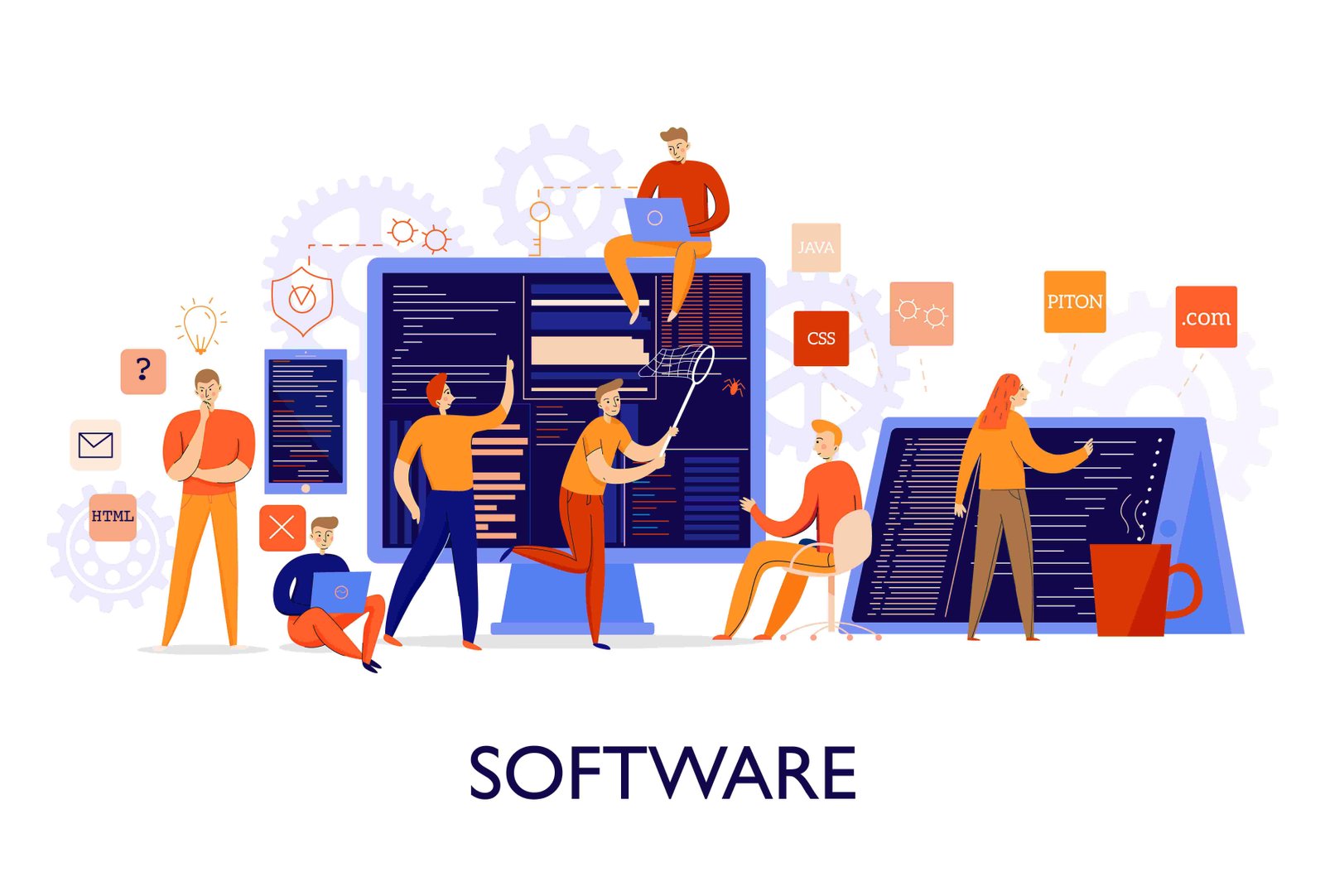
The difference between software projects that deliver exceptional value and those that disappoint stakeholders often traces back to how rigorously teams follow proven development methodologies. The software development life cycle provides the structural framework that guides projects from initial conception through deployment and maintenance, ensuring that quality remains paramount throughout every phase. Organizations that implement sophisticated software development life cycle strategies create predictable, repeatable processes that consistently deliver high-quality software on schedule and within budget.
Understanding the Software Development Life Cycle
The software development life cycle (SDLC) encompasses the complete sequence of phases that software projects traverse from inception to retirement. While specific implementations vary across methodologies and organizational contexts, core SDLC phases typically include planning and requirements analysis, system design, implementation and coding, testing and quality assurance, deployment, and maintenance. Each phase serves distinct purposes while contributing to overall project success through well-defined activities, deliverables, and quality gates.
Strategic software development life cycle management recognizes that quality cannot be tested into software after development—it must be built in from the beginning through disciplined processes, clear standards, and rigorous validation at every stage. This quality-first philosophy shapes how organizations approach each SDLC phase, emphasizing prevention over detection and investing in activities that eliminate defects early when they're least expensive to fix.
Different SDLC models suit different project contexts. Waterfall approaches work well for projects with stable, well-understood requirements where sequential phase completion makes sense. Agile methodologies excel when requirements evolve, stakeholder feedback drives direction, and incremental delivery provides value. Hybrid approaches combine elements from multiple models to address specific organizational needs. Sophisticated organizations select software development life cycle models based on project characteristics rather than applying single methodologies universally.
Requirements Analysis: Foundation for Quality
Quality software delivery begins with comprehensive requirements analysis that captures what stakeholders need, why they need it, and how success will be measured. This critical software development life cycle phase determines whether subsequent phases build the right solution. Inadequate requirements analysis—perhaps the most common cause of project failure—results in expensive rework, missed deadlines, and software that fails to address actual business needs.
Effective requirements analysis employs multiple elicitation techniques to capture complete, accurate requirements. Stakeholder interviews reveal high-level objectives and constraints. Workshops facilitate collaborative requirement development among diverse participants. Observation studies document how users actually perform current processes rather than how they describe them. Prototyping helps stakeholders visualize proposed solutions and refine requirements through concrete feedback. Mature software development life cycle processes combine these techniques to develop comprehensive requirement specifications.
Requirements must be documented with sufficient detail, clarity, and precision to guide design and development while remaining verifiable through objective acceptance criteria. Ambiguous requirements like "the system should be fast" fail to provide actionable guidance. Specific, measurable requirements like "the system shall return search results within 2 seconds for 95% of queries" enable objective validation. Quality-focused software development life cycle strategies emphasize requirement quality attributes including completeness, consistency, feasibility, and testability.
Requirements traceability links each requirement through subsequent SDLC phases to design elements, code modules, test cases, and delivered functionality. This traceability enables impact analysis when requirements change, ensures complete test coverage, and facilitates compliance verification. Organizations implementing rigorous software development life cycle processes maintain traceability matrices or use specialized tools that track requirement lineage throughout the project lifecycle.
System Design: Architectural Decisions for Quality
The design phase translates requirements into technical blueprints that guide implementation. Architectural decisions made during this software development life cycle phase profoundly impact software quality attributes including performance, scalability, security, maintainability, and reliability. Superior design creates elegant solutions that meet functional requirements while optimizing non-functional qualities that determine long-term success.
High-level system design establishes overall architecture, major components, and their interactions. These architectural decisions should explicitly address quality requirements through patterns proven effective for achieving desired attributes. Need high availability? Design includes redundancy and failover mechanisms. Require strong security? Architecture implements defense-in-depth with multiple protective layers. Demand high performance? Design minimizes latency through caching, asynchronous processing, and optimized data access. Strategic software development life cycle management ensures architectural decisions align with quality objectives.
Detailed design specifications provide granular blueprints for implementation, documenting data structures, algorithms, interface definitions, and module interactions. This level of design detail enables developers to implement functionality consistently while facilitating code reviews and maintenance. Quality-oriented software development life cycle processes invest adequately in detailed design rather than rushing into coding with incomplete specifications that result in inconsistent implementations requiring extensive rework.
Design reviews represent critical quality gates within the software development life cycle. Peer review of architectural and detailed designs catches flaws before they're encoded in software, where they become exponentially more expensive to fix. Formal design review processes bring together architects, developers, quality assurance professionals, and relevant stakeholders to evaluate proposed designs against requirements, quality standards, and best practices. Organizations serious about quality make design reviews mandatory rather than optional.
Implementation: Coding Standards and Practices
The implementation phase transforms designs into executable code, representing the software development life cycle stage where most project effort concentrates. Quality during implementation depends on disciplined adherence to coding standards, proven development practices, and continuous validation through testing and code review. Organizations that view implementation as mere translation of designs into code miss opportunities to build quality through superior development practices.
Coding standards establish consistent formatting, naming conventions, documentation requirements, and structural guidelines that improve code readability and maintainability. While specific conventions matter less than consistency, well-designed standards reflect lessons learned about what makes code understandable to developers beyond the original author. Quality-focused software development life cycle processes enforce coding standards through automated linters and code review gates that reject non-compliant submissions.
Test-driven development (TDD) inverts traditional implementation sequences by writing tests before code. Developers first create automated tests specifying expected behavior, then implement minimal code to make tests pass, then refactor to improve quality while maintaining passing tests. This disciplined approach ensures comprehensive test coverage, encourages modular design, and provides immediate feedback on code correctness. Progressive software development life cycle strategies increasingly adopt TDD for its quality and productivity benefits.
Continuous integration practices require developers to merge code changes to shared repositories frequently—often multiple times daily—triggering automated builds and tests. This practice surfaces integration problems immediately rather than allowing them to accumulate until major integration efforts reveal numerous conflicts. CI/CD pipelines automate compilation, testing, and deployment, creating fast feedback loops that accelerate development while maintaining quality. Modern software development life cycle implementation relies heavily on sophisticated CI/CD infrastructure.
Peer code review represents another critical quality practice during implementation. Before code merges into main branches, other developers review changes for correctness, maintainability, security vulnerabilities, and adherence to standards. Research consistently shows that code review catches defects more cost-effectively than testing alone. Quality-oriented software development life cycle processes make peer review mandatory and allocate adequate time for thorough reviews rather than treating them as perfunctory approvals.
Testing: Multi-Layered Quality Validation
Testing validates that software meets requirements and quality standards before reaching users. Comprehensive software development life cycle testing strategies implement multiple layers addressing different validation needs. Unit tests verify individual components in isolation. Integration tests confirm modules work together correctly. System tests validate complete functionality against requirements. Acceptance tests verify software meets business needs from user perspective. Performance tests ensure adequate response times under load. Security tests identify vulnerabilities before deployment.
Test automation provides the foundation for sustainable quality as software evolves. Manual testing proves too slow and expensive for regression testing every change, leading organizations to accumulate technical debt as they skip comprehensive testing to meet deadlines. Automated tests run in minutes, execute consistently without human error, and integrate into CI/CD pipelines for continuous validation. Mature software development life cycle processes maintain automated test suites covering 80% or more of code, focusing manual testing on exploratory scenarios and usability evaluation.
Test planning occurs early in the software development life cycle rather than being deferred until implementation completes. Test strategies specify what will be tested, how testing will occur, entry and exit criteria for test phases, and resource requirements. Test case design derives directly from requirements, ensuring comprehensive validation coverage. Early test planning enables parallel test development during implementation and ensures adequate resource allocation for thorough quality validation.
Defect management processes track issues from discovery through resolution, maintaining metrics on defect rates, severity distributions, resolution times, and root causes. These metrics inform process improvements by revealing where defects originate and which development practices prove most effective at preventing them. Data-driven software development life cycle optimization uses defect metrics to continuously improve quality outcomes across projects.
Deployment: Controlled Release Management
Deployment transitions software from development into production environments where users depend on it for critical business functions. This software development life cycle phase requires careful planning, risk mitigation, and rollback capabilities to ensure smooth transitions that minimize disruption. Organizations that treat deployment as simply copying files to production servers inevitably experience preventable outages and quality issues.
Deployment planning identifies dependencies, sequences activities, defines validation criteria, establishes communication protocols, and prepares rollback procedures. Complex enterprise deployments may involve database migrations, API version management, infrastructure provisioning, and coordinated updates across multiple services. Sophisticated software development life cycle processes document deployment procedures thoroughly and rehearse them in staging environments before production execution.
Blue-green deployment strategies maintain two production environments, allowing new versions to be deployed and validated in the inactive environment before routing traffic to it. If problems emerge, routing simply switches back to the previous version, enabling instant rollback without downtime. Canary deployments gradually route increasing traffic percentages to new versions while monitoring quality metrics, automatically rolling back if anomalies appear. These progressive software development life cycle deployment strategies minimize risk while enabling rapid iteration.
Maintenance: Sustaining Quality Over Time
The maintenance phase addresses defects discovered in production, implements enhancements, and adapts software to changing requirements and environments. For most software, maintenance represents the longest and most expensive software development life cycle phase, often consuming 60-80% of total lifecycle costs. Organizations that underinvest in maintainability during earlier phases pay dearly through inflated maintenance costs and reduced agility.
Proactive maintenance prevents problems before they impact users. Regular dependency updates patch security vulnerabilities. Performance monitoring identifies degradation trends before they affect user experience. Capacity planning ensures infrastructure scales ahead of demand. Quality-focused software development life cycle strategies allocate resources for proactive maintenance rather than operating purely reactively.
Conclusion
Strategic software development life cycle implementation provides the disciplined framework necessary for consistent quality delivery. By investing adequately in requirements analysis, architectural design, coding standards, comprehensive testing, controlled deployment, and proactive maintenance, organizations create repeatable processes that predictably deliver high-quality software. The software development life cycle isn't bureaucratic overhead to be minimized—it's the essential structure that enables teams to manage complexity, mitigate risks, and consistently meet stakeholder expectations. Organizations that embrace SDLdiscipline as strategic advantage rather than compliance burden achieve superior quality outcomes that translate directly into competitive success.

 English
 Arabic
 French
 Spanish
 Portuguese
 Deutsch
 Turkish
 Italiano
 Russian
 Romaian
 Portuguese (Brazil)
 Greek
Greek