


Game Based Learning Market Size, Share and Trends Analysis Report – Educational Technology Solutions and Forecast to 2033
The Global Game-Based Learning Market represents an innovative educational approach that integrates game design elements, mechanics, and principles into learning environments to enhance engagement, motivation, and knowledge retention. Game-based learning encompasses digital and physical games specifically designed for educational purposes, combining entertainment with pedagogical objectives to create immersive learning experiences. These solutions leverage interactive narratives, challenge-reward systems, immediate feedback mechanisms, progressive difficulty levels, and competitive or collaborative elements to make learning more engaging and effective across diverse subjects including mathematics, science, languages, history, and professional skills development.
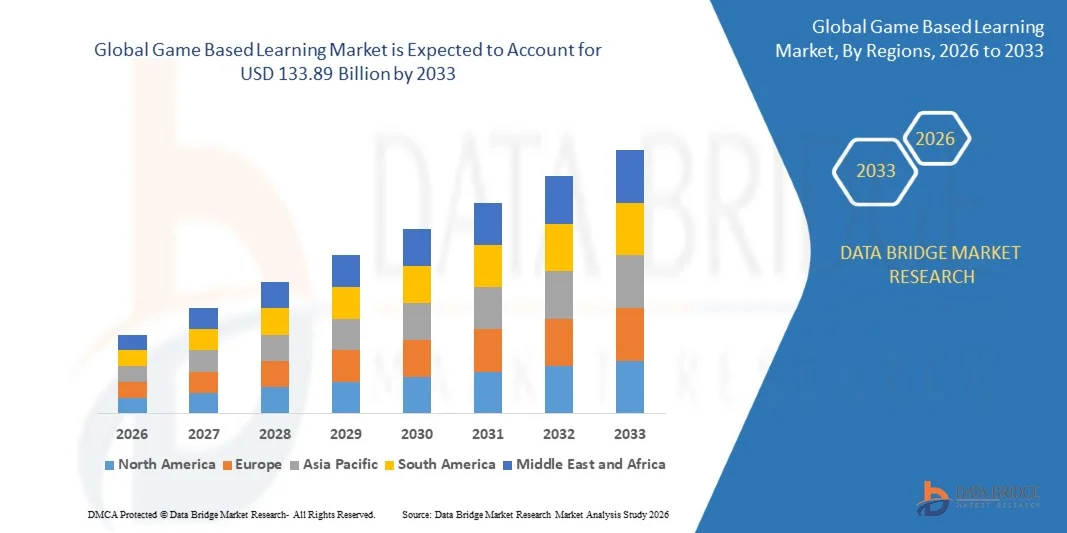
Unlike traditional gamification that simply adds game elements to existing content, game-based learning creates complete game experiences where educational objectives are intrinsically woven into gameplay mechanics. These platforms range from simple educational mobile apps and browser-based games to sophisticated virtual reality simulations and multiplayer online learning environments. The global Game-Based Learning Market size was valued at USD 26.59 billion in 2025 and is expected to reach USD 133.89 billion by 2033, at a CAGR of 22.39% during the forecast period. This explosive growth reflects increasing recognition of active learning benefits, digital natives' preferences for interactive content, remote learning expansion, and mounting evidence demonstrating game-based learning's effectiveness in improving educational outcomes across age groups and subjects.
Request a sample of Global Game-Based Learning Market @ https://www.databridgemarketresearch.com/request-a-sample?dbmr=global-game-based-learning-market
Key Market Drivers in Game-Based Learning Market
Multiple powerful factors are accelerating the game-based learning market's remarkable growth. The fundamental shift toward student-centered, active learning pedagogies drives educators to seek engaging alternatives to passive instruction methods, with game-based learning proven to increase motivation, participation, and knowledge retention significantly. Digital native students who have grown up with video games, smartphones, and interactive technologies respond more positively to game-based educational approaches aligned with their learning preferences and technological comfort.
The COVID-19 pandemic's lasting impact on education accelerated digital learning adoption and highlighted the need for engaging remote learning solutions that maintain student interest and participation outside traditional classroom settings. Growing evidence from educational research demonstrating game-based learning's effectiveness in developing critical thinking, problem-solving, collaboration, and subject-specific competencies strengthens institutional adoption decisions. Advances in educational technology, including artificial intelligence for adaptive learning, virtual and augmented reality for immersive experiences, and learning analytics for performance tracking, enhance game-based learning capabilities and outcomes.
Government initiatives promoting digital education, STEM learning, and 21st-century skills development drive funding for innovative educational technologies including game-based solutions. Corporate training and professional development sectors increasingly adopt game-based learning for employee onboarding, skills training, compliance education, and leadership development, recognizing superior engagement and retention compared to traditional methods. Additionally, declining costs of game development tools, cloud infrastructure, and mobile devices make game-based learning more accessible and affordable for educational institutions and organizations worldwide.
Market Segmentation of Game-Based Learning Market
The global game-based learning market can be segmented based on game type, platform, end-user, application, and revenue model. By game type, the market includes training games, assessment games, knowledge application games, simulation games, and location-based games. Simulation games hold significant market share, particularly in professional training contexts where realistic scenario practice develops practical skills without real-world risks or costs.
Inquire here to explore industry-specific data @ https://www.databridgemarketresearch.com/inquire-before-buying?dbmr=global-game-based-learning-market
Platform segmentation encompasses online games, console-based games, mobile-based games, and computer-based games. Mobile-based games demonstrate the fastest growth due to smartphone ubiquity, accessibility, and the ability to deliver learning experiences anytime and anywhere. End-user categories include K-12 education, higher education, corporate training, and others. Corporate training represents a rapidly growing segment as businesses recognize game-based learning's effectiveness for employee development and skill enhancement.
Application-wise, the market serves various subjects including STEM education, language learning, social studies, arts and creativity, health and physical education, and professional skills development. STEM education shows particularly strong adoption due to game-based learning's effectiveness in making abstract concepts tangible through interactive visualizations and experimentation. Revenue models include one-time purchase, subscription-based, freemium, and institutional licensing, with subscription and institutional licensing models gaining prominence as they provide recurring revenue streams and easier scalability for educational institutions.
Competitive Landscape
The game-based learning market features a diverse and dynamic competitive landscape comprising educational game developers, educational technology companies, traditional publishers entering digital education, and major technology platforms. Key players include Kahoot! ASA, Classcraft Studios Inc., Duolingo Inc., Age of Learning Inc., Minecraft Education Edition (Microsoft), Prodigy Education Inc., Roblox Corporation, Unity Technologies, Breakaway Games, SimCity EDU (GlassLab Games), and Legends of Learning. These companies differentiate through engaging game design, pedagogical effectiveness, curriculum alignment, and platform accessibility.
Kahoot! leads in the assessment game segment with its popular quiz-based platform used by millions of teachers globally. Duolingo dominates language learning through its gamified approach combining bite-sized lessons with reward systems and social features. Minecraft Education Edition leverages the popular game's creative sandbox environment for project-based learning across subjects. Prodigy Education focuses on mathematics education for elementary and middle school students through fantasy role-playing game mechanics.
Competition extends beyond pure-play educational game companies to include general game development platforms like Unity and Roblox that provide tools for educators and developers to create educational experiences. Traditional educational publishers including Pearson, McGraw-Hill, and Houghton Mifflin Harcourt integrate game-based elements into digital curriculum offerings. Companies compete on factors including content quality, pedagogical effectiveness, user engagement, curriculum standards alignment, analytics capabilities, pricing models, platform compatibility, and ease of implementation for educators. Strategic partnerships between game developers and educational content providers create comprehensive solutions combining engaging gameplay with rigorous educational content.
Emerging Opportunities
The game-based learning market presents numerous emerging opportunities driven by technological advancement and evolving educational needs. Virtual reality and augmented reality integration creates immersive learning experiences impossible in traditional formats, particularly valuable for subjects like history (virtual field trips), science (molecular visualization), and vocational training (equipment operation simulation). These immersive technologies command premium pricing and represent high-growth segments.
Artificial intelligence and machine learning enable adaptive game-based learning that dynamically adjusts difficulty, content, and learning paths based on individual student performance and learning styles, maximizing effectiveness and personalization. Multiplayer and collaborative game-based learning experiences develop teamwork, communication, and social-emotional skills alongside subject knowledge, addressing holistic educational objectives. Blockchain technology applications for verifiable credentials, achievement tracking, and creating educational economies within games present innovation opportunities.
Microlearning games delivering focused learning objectives in 5-10 minute sessions align with modern attention patterns and busy schedules, particularly attractive for corporate training and professional development. Subject areas currently underserved by game-based learning, including arts, music, and humanities, present opportunities for creative developers to expand market coverage. Furthermore, accessibility-focused game-based learning designed for learners with diverse abilities, learning differences, and special educational needs represents both a market opportunity and social impact potential.
Regional Analysis
Geographically, the game-based learning market demonstrates varied adoption patterns reflecting regional educational priorities, technology infrastructure, and cultural attitudes toward gaming in education. North America leads the global market, driven by high educational technology spending, widespread device availability, progressive pedagogical approaches, strong gaming culture acceptance, and the presence of major edtech companies and game developers. The United States dominates regional activity with both institutional adoption and individual consumer purchases.
Europe represents a substantial market characterized by government support for digital education, curriculum innovation, and strong emphasis on 21st-century skills development. Countries including the United Kingdom, Germany, Nordic nations, and the Netherlands show particularly high game-based learning adoption. European focus on data privacy and educational standards influences product development and market approach.
Asia-Pacific demonstrates the fastest growth rate, fueled by massive student populations, increasing educational technology investments, growing middle-class demand for quality education, government digitalization initiatives, and strong cultural emphasis on educational achievement in countries like China, India, Japan, South Korea, and Southeast Asian nations. Mobile-first strategies prove particularly effective given smartphone penetration exceeding computer access in many markets.
Latin America shows emerging growth driven by improving internet connectivity, increasing device access, and recognition of innovative educational approaches, though economic constraints and infrastructure limitations moderate adoption compared to developed markets. The Middle East and Africa represent developing markets with growing potential linked to government education modernization initiatives, youth demographics, and increasing technology access, though current penetration remains limited.
Frequently Asked Questions (FAQs)
1. How effective is game-based learning compared to traditional methods? Research demonstrates game-based learning can improve knowledge retention by 20-40%, increase engagement significantly, and enhance problem-solving skills. Effectiveness depends on quality game design, appropriate implementation, and integration with comprehensive educational strategies rather than standalone use.
2. What age groups benefit from game-based learning? Game-based learning benefits all age groups from early childhood through adult professional development. Content, complexity, and mechanics are tailored to developmental stages, with proven effectiveness across K-12 education, higher education, and corporate training contexts.
3. Do teachers need special training to implement game-based learning? While intuitive platforms require minimal training, effective implementation benefits from professional development covering game selection criteria, classroom integration strategies, assessment approaches, and technical troubleshooting. Many providers offer teacher resources, tutorials, and support communities.
4. Can game-based learning address different learning styles? Yes, well-designed game-based learning accommodates multiple learning styles through visual elements, audio cues, kinesthetic interaction, text-based information, and varied challenge types. Adaptive technologies further personalize experiences to individual learning preferences and pace.
5. What are the costs associated with game-based learning implementation? Costs vary widely from free platforms to premium institutional licenses. Options include free browser-based games, affordable mobile apps ($1-10), subscription services ($5-20/month per user), and institutional licenses ($1,000-50,000+ annually) depending on features, user count, and support levels.
Access the full Global Game-Based Learning Market Report here @ https://www.databridgemarketresearch.com/checkout/buy/global-game-based-learning-market/compare-licence
For more Report :
Mediastinal Mass Treatment Market
Amnestic Disorders Therapeutics Market
About Us
Data Bridge is one of the leading market research and consulting agencies that dominates the market research industry globally. Our company's aim is to give clients the knowledge they require in order to function in changing circumstances. In order to give you current, accurate market data, consumer insights, and opinions so that you can make decisions with confidence, we employ a variety of techniques, including surveys, video talks, and focus groups around the world.
Contact
Data Bridge Market Research Private Ltd. 3665 Kingsway — Suite 300 Vancouver BC V5R 5W2 Canada
Phone: +1 614 591 3140 (US) +44 845 154 9652 (UK)
Email: Sales@databridgemarketresearch.com
Website: https://www.databridgemarketresearch.com/

 English
 Arabic
 French
 Spanish
 Portuguese
 Deutsch
 Turkish
 Dutch
Dutch
 Russian
 Romaian
 Portuguese (Brazil)
 Greek
Greek